First Love, First Dead

When I met him, I had already learned how to live without wanting and without expecting. I wore that skill like a norm, something practiced for so long it no longer felt like defense but personality. Desire had been trained out of me. Hope felt inefficient. I had reached a state that resembled peace, and I mistook it for stability.
I was planning to move to Japan. Not because I was brave. Not because I was running. I wanted order. Structure. A life where emotions were controlled, where silence was respected, where people mastered the art of restraint. I believed I needed a world that hid its feelings the way I did. Japan felt like a country built on emotional discipline, and I wanted to belong to something that did not ask me to expose myself.
I was satisfied with that plan.
Then I saw him.
It happened at my farewell party, surrounded by voices, glasses clinking, people celebrating departures as if leaving were a victory. I noticed his face and felt something tighten inside me, sudden and invasive, like the air had thickened without warning. It was not attraction. It was not excitement. It was something colder and more precise.
Recognition.
My body reacted before my mind had time to interfere. I felt as if I had stepped into a memory I did not remember living, but somehow already knew. My chest went still. My thoughts slowed. And a certainty formed quietly, with no emotion attached, which frightened me more than panic would have.
This man will change you.
I did not want him. I did not imagine a future. I did not romanticize the moment. But something in me understood that whatever I had carefully built to remain untouched would not survive him.
Until then, love had never stayed long enough in my life to demand anything from me. My relationships ended before they deepened. I never had a childhood love, never fell in love. I am capable of spending years with a man and never catch a feeling and telling this to their face daily bases. I believed I was incapable of attachment, incapable of devotion, incapable of loving without losing control. I thought I was immune. I did not know that immunity is often just untested exposure.
What followed did not feel like falling in love. It felt like being slowly occupied. I remained guarded. He remained attentive. I stayed distant, convinced I was in control. He stayed patient, convincing me he understood me better than I understood myself. I trusted the calm. I trusted the steadiness. I trusted the feeling of being seen without realizing how carefully that vision was being shaped.
Then he left for Ireland.
Distance did not weaken what was forming. It intensified it. I began to feel a constant, low-level anxiety I could not name. A fear of absence. A fear of replacement. A fear that whatever connection existed between us could vanish without explanation. I did not know how to express vulnerability. I had never learned how to ask for reassurance without feeling exposed.
And so, when fear overwhelmed me, I lied.
I lied once.
I carried it for a week before it began to poison me. I am not built for deception. Not because of morality, but because my mind cannot hold falsehood for long. Lying requires maintenance, and I collapse under that kind of weight. So I confessed.
I did not confess to be forgiven.
I confessed because I could not breathe.
I did not know any better then. I did not understand love, fear, or power. I only knew that I had made a mistake, and that telling the truth felt like the only way back to myself. I believed honesty would reset us. I did not yet know that truth, in the wrong hands, becomes leverage.
I met ethics that day, along with the hard truth that manipulation can exist even inside the most merciful forgiveness of love. I didn’t know it then, but I’m glad to have added that knowledge to my skills now.
After my confession, guilt became my permanent state.
It did not come and go. It settled. It shaped my posture, my tone, my expectations of myself. I lived as if I constantly owed something, as if love were now a debt I had to repay with good behavior. I overcorrected everything. I became obedient, predictable, careful to the point of self-erasure. I mistook responsibility for punishment.
I wanted him to feel safe with me.
I wish I had known that this was the path I followed into a bear cave, led by the bear itself.
So I shrank.
I learned how to anticipate his moods. I edited my needs before they reached my mouth. I softened my reactions. I apologized quickly, even when I didn’t fully understand what I was apologizing for. Guilt became a structure, and I lived inside it. He did not need to enforce control. I enforced it myself.
And he accepted this version of me without resistance.
I still believed then that love was about accountability. That mistakes were forgivable if the person who made them took responsibility. I believed remorse mattered more than the act itself. I believed this deeply. I believed that perfection was a fantasy, and that intimacy meant staying when humans inevitably failed each other.
That belief kept me there longer than anything else.
When the cheating happened, it did not arrive as a shock to me. It arrived inside a dynamic that had already bent me out of shape. And again, something unexpected happened.
I felt relief.
For the first time in two years, the moral imbalance disappeared.
Our mistakes could not be morally compared, but as a concept, they were both mistakes and they had been made.
And I knew immediately that the relief I felt was not healthy. It was not love. I was aware of it even as it happened. I knew it was obsessive, distorted, probably wrong. I knew that part of why I forgave him had nothing to do with virtue and everything to do with investment. To see my pain mirrored. To see remorse reflected. To feel that the emotional scales had finally balanced.
I did not dress this up as morality at the time. I knew exactly what I was doing.
But I also believed something else, something deeper and more stubborn than guilt or pride.
I believed it was utopic to expect a lifetime without mistakes. I believed humans fail not because they are evil, but because they are human. And I believed that when you choose to share a life with someone, their failures inevitably touch you, just as yours touch them. Not as a courtroom. Not as a hierarchy of guilt. Just as a shared reality that demands understanding and adjustment.
Something happened.
How do we make sure it does not happen again?
That was my logic. That was my sincerity. And that belief kept me there longer than anything else.
When he cheated, he apologized intensely. For a week, he became everything remorse looks like on paper. Letters. Messages. Long, articulate explanations. He suffered loudly. He acknowledged the damage. And that mattered to me, because accountability mattered to me more than purity ever did.
What I did not understand then was that remorse can be performed without being integrated. That guilt can pass through a person without altering them. Mine had reshaped me. His moved on.
I should have left then. Not because of the cheating, but because equality had finally arrived and still the structure remained the same. I did not see that clearly at the time.
Around that period, my body began to shut down.
This was my first depression. Not emotional pain. Not sadness. A functional collapse. I could not work. I could not move. Days lost their edges. I stayed in bed for stretches of time without showering, without eating properly, without language for what was happening to me. I did not expect help. I did not expect rescue. I was not capable of expectation at all.
I did not even know I was disappearing.
Only later did I understand what I had been living with.
Only later did I realize that the man beside me had watched it all without instinct. Not cruelty. Not violence. Absence. A lack of reaction where there should have been something primitive and human.
This realization came after, not during.
Because when you are that empty, you are not observing. You are enduring.
He was extraordinary in many ways. Brilliant. Sharp. Irritatingly intelligent. The kind of man people either loved immediately or hated instinctively. Arrogant. Cocky. Very strategic. He would dismantle people in conversation for fun and often be right while doing it. He had a mind that cut through others with surgical precision, and somehow I admired that. I loved that he did not soften himself to be liked. I loved that he could see flaws clearly, name them, fix them. There was something almost sociopathic about his intelligence, and it fascinated me.
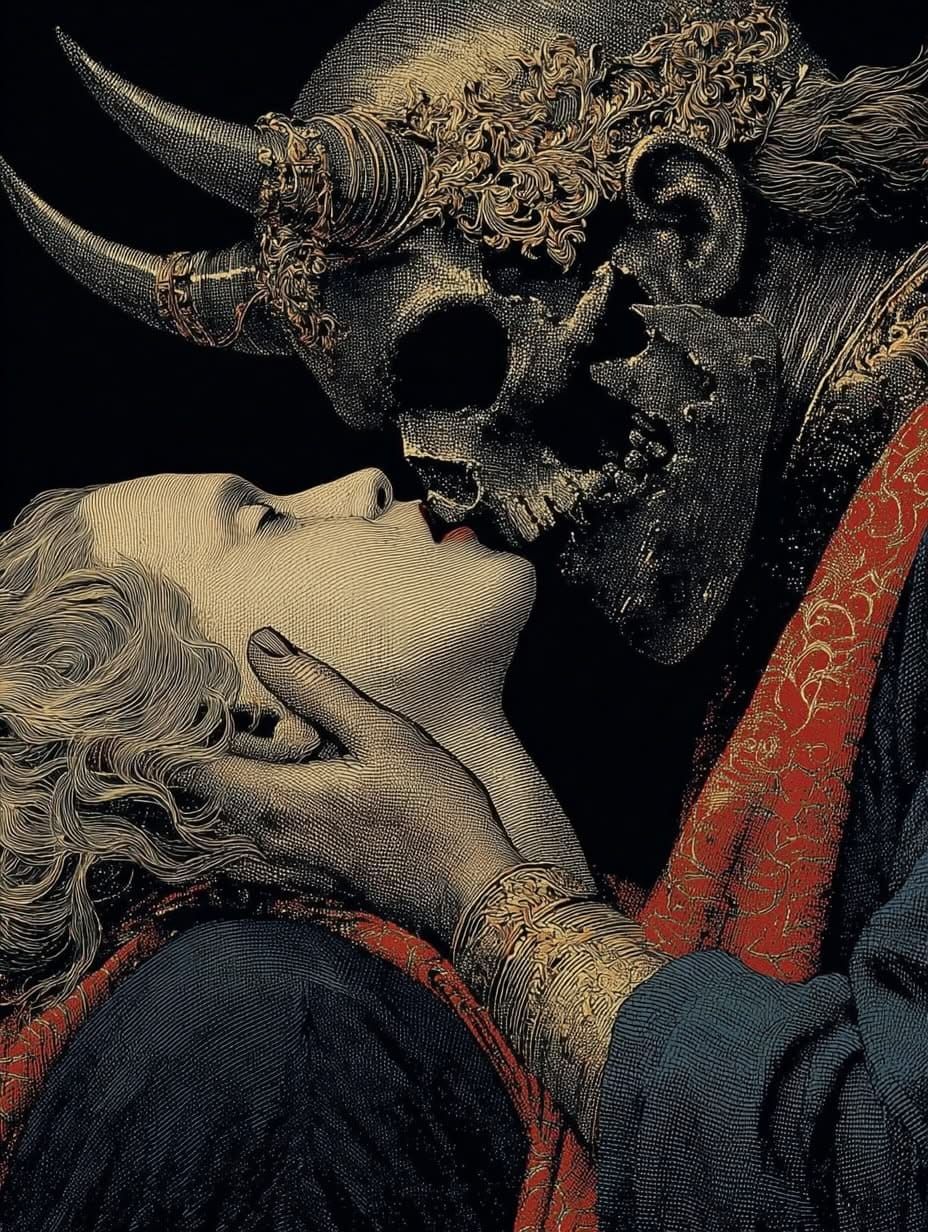
For the first time, I felt intellectually met. It was like watching Satan during his working hours. I loved him the moment I looked into his eyes, maybe even before.
That was why I fell in love with him. Not safety. Not comfort. Precision.
But I didn’t know that intelligence without humanity creates a vacuum. When empathy does not follow perception, what remains is observation without care. And that absence, I learned later, was the true danger.
One day, without drama, without anger, without hope left to negotiate, staying stopped being possible.
It was New Year’s Eve.
The kind of night that pretends to be about beginnings while quietly demanding endings.
2024 was bleeding into 2025, and the house was preparing to host his parents. They hadn’t arrived yet. Their presence was already everywhere. In the air. In his tension. In the way we moved around each other, rehearsing normality like actors who had forgotten the script but refused to leave the stage.
We argued.
Not dramatically. Not loudly at first.
One of those arguments that start over nothing and end up dragging the corpses of every unspoken thing behind them.
At some point, my hand tightened around the mug I was holding.
I didn’t mean to break it. I don’t even remember having the mug in my hand.
I wasn’t trying to make a scene. I wasn’t even shouting.
I wasn’t angry in the way people imagine anger.
It shattered anyway.
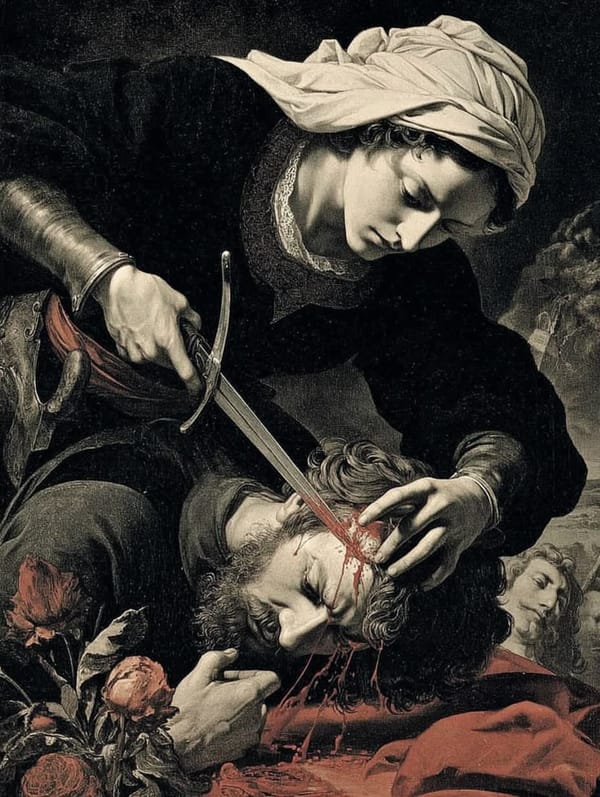
The sound was sharp and obscene. Porcelain giving up. Something clean becoming dangerous. I stood there, stunned, watching red spread where it didn’t belong, trying to understand how a moment slips out of control without asking permission. Watching my hand turn black, watching how my vein splashed red into my face in a blink. What was happening.
I wasn’t panicking.
I was ashamed to show a contained demon to the person I loved the most.
Ashamed that I had reached a place where my body reacted before my mind could stop it. Ashamed that love had pushed me this far. Ashamed because I knew myself, and I knew that when I lose control, I am not gentle, and I do not stop until the other person is destroyed completely and left with nothing but life itself. I have lived those consequences before. I learned restraint the hard way.
And that night, restraint cracked. My promise broke along with the mug.
But none of that mattered to him in that moment.
He didn’t look at my hand.
He didn’t look at my face.
He didn’t look at me even once.
He looked at the floor.
At the mess.
At what needed to be cleaned before his parents arrived.
He shouted, swore, panicked about the house. About order. About perfection. About how things should look, about how my blood was on the newly painted walls.
And in that moment, something inside me died so quietly I almost missed it.
I was scared that the mug incident was the end of our love, that I had to leave him to protect him from myself. But he had turned superficial and plastic inside the perfect stage we had created. He fit there perfectly, under the spotlights of my own tears and hard work, so that his alter ego would leave me alone.
I realized that if I collapsed right there, if I stopped breathing, if I disappeared entirely, he would still be angry about the floor or the wall or something equally ridiculous. I didn’t even know what to say about how absurd it was. I didn’t say anything to him. Classic me. I stood up, washed my hand, needed stitches but whatever, and sat in my Prada dress waiting for his parents to arrive.
I had stopped expecting him to be human. He was my Ken. I played Barbie for him, for the last time.
That night didn’t explode our relationship.
It clarified it.
A week later, we were cooking when he commented again on something about me and my plans to launch Ve Calypso. I was empty by then. No job. No savings. A forgotten, misled direction. Some of it because of him. Some of it because of me. And he looked at me the way surgeons look at organs they’re about to discard and said:
“Maybe the problem is you.
Maybe everything happening to you is because of you.”
He didn’t mean just us.
My fears.
My losses.
My entire life.
My mother. Her violence. Her absence.
The woman I buried under layers of silence so deep I forgot she was still alive inside me.
He placed every weight at my feet and walked away clean, untouched, superior.
And that sentence — that sentence — didn’t break me.
It woke me up.
I saw myself through his eyes in that moment. Not as a woman. Not as a lover. Not even as a failure worth fixing.
As rubble.
A collapsed house.
A fallen castle.
Something already ruined, where throwing another stone wouldn’t make a difference.
And I understood something terrifying and simple.
He saw that there was nothing left of me to give — to him or even to myself. I saw that truth in him, and I am thankful for that sentence. That terrifying truth made me realize that if I didn’t leave that house right then, even rubble would turn into sand.
I told him that one day he would watch me on television, as he always said. That I would become everything I said I would be with my skills. That I would allow no one to speak to me like that while looking into my eyes. Even if I was sand, I would become the ocean floor if necessary to swallow him whole. My respect for love was too great; I left myself to die without regret.
And for the first time in a long time, I saw fear crack his arrogance. I saw the same look he had the first day we met.
Because he knew.
Between his sociopathic intelligence and his hunger for control, he knew I was right. He knew I was dangerous in a way he couldn’t manage. He knew that if I left, I wouldn’t come back smaller — I would come back more untouchable than when he first met me.
Jeez, Alessandro, it was so smart of you to build a cage around me so softly and gently that I didn’t feel trapped at all, wrapped in the greatest love you could offer. I was high on being loved by a great predator, forgetting that I was still the hunt.
I packed my things.
I stood at the door.
He was crying. Shaking. Furious in that animal way people get when they realize control is slipping through their fingers.
I asked the universe for a sign, just to be sure my ego wasn’t leading the decision.
The clock read 22:22.
The temperature was 22 degrees.
The date mirrored itself: 02.02.
The world answered without subtlety.
So I left.
After the breakup, he came every day beneath my window. Flowers like apologies that couldn’t speak. Morning and night. Messages. Promises.
And then a proposal — oversized, dramatic, desperate. A ring meant to anchor me back into his orbit. A ring that was a tool, not a purpose.
But I could see the truth in it.
It wasn’t love reaching forward.
It was fear reaching backward.
We both knew, built the way we were by God itself, that no one could love us the way we loved each other — first through our demons, then through the angels we created from them.
I said no.
And that no was heavy. Heavy like denying myself a future I had secretly dreamed of. Heavy like killing the possibility of a family with my own hands. Every no felt like betrayal — not of him, but of the little girl in me who had always wanted permanence.
And I had to say “no” every fucking day for a month. Each time in a different way, hurting him and then myself with my snake tongue.
He couldn’t survive the separation.
So he left the country.
And I left myself for a while.
I traveled for months. I vanished. I learned how to breathe again without asking permission. I learned what silence sounds like when it isn’t punishment.
Before he left, we spent one last night together.
We weren’t a couple anymore, but our bodies remembered before our minds did. That night felt like a ghost. In the morning, he opened his eyes and started crying immediately. He knew. We both did. His pain felt human and real for the first time. My heart shattered for us, but my logic was right. There was no way we could survive each other without consuming one another. Logic was all I had left, and all I could trust.
Sleeping in each other’s arms had been our most sacred ritual. I loved sleeping with him. Even the simplest things — eating, sleeping, breathing — became pleasure when shared with him. I loved waking up in his arms. I knew he loved it more. It was the only time he ever looked innocent.
And now it was gone forever, along with the last four years. Beautiful memories, though.
Maybe I’ll never sleep in someone’s arms again. Maybe that’s drama. Maybe it’s just the truth of this season — the way sleep still avoids me, the way my body remembers before my mind forgives. Even after months, living alone in my new one-bedroom apartment, I still can’t sleep in my bed. I can’t share my bed with anyone. Not because I miss him — no. I guess habits are more dangerous than love itself.
Sometimes I wonder if I turned him into that person by creating a space where he could share his darkest subconscious with the person he trusted most, and found her equally mad.
Or if he was always that person, and I simply stayed long enough to see him without illusion.
He loved me because I was his mirror and his threat. Because I was logical, sharp, playful, uncontrollable. Because I could dismantle him intellectually and still make him laugh. Because people loved me easily. Because I was alive in ways he could never fully dominate or experience.
And when that aliveness collapsed into exhaustion, he didn’t know what to do with the remains.
He taught me a lot. That is the most important thing, and for that I am thankful. Knowledge is what I respect most, and he gave me that by making me experience so many things.
Thank you for showing me how capable of loving I am.
Thank you for showing me how much I can sacrifice for my loved ones.
Thank you for showing me my personal limits of tolerance.
You were a great teacher, and we had unforgettable moments, AV.
We still carry tattoos of each other on our bodies. A promise to remove them if we ever fall in love again. I guess we’ll live and see. I wish the best for both of us.
We did a great job, no matter what.
Ti amo sempre, amore della mia vita.
At least the version of us that loved before love became a weapon.