Sky Above, Silence Within

I was raised in a house where religion existed but ownership did not. One of my parents was Muslim, the other Christian, and yet neither one tried to convert me into certainty. There were no threats about hell, no insistence on ritual discipline, no emotional blackmail disguised as devotion. I was not raised under fear. I was raised under permission. I was allowed to watch. I was allowed to listen. I was allowed to compare. If I entered a mosque, I was not told this is the only door. If I entered a church, I was not told this is the final truth. I grew up between two large, structured Abrahamic systems and somehow slipped through the pressure that usually forces children to choose early. That absence of pressure shaped me more than any doctrine could have.
Because when no one forces you to believe, you begin to evaluate belief the way you evaluate anything else. You study it. You dissect it. You observe the psychological architecture behind it. You ask why one religion emphasizes obedience and another emphasizes confession. You notice how one promises order and another promises forgiveness. You see how power moves through hierarchy, how guilt is administered, how identity is reinforced. You do not tremble before it. You examine it.
And yet, while I was observing Islam and Christianity as systems, something else was operating beneath them in my family without ever being formally named. It was not written down. It was not taught in sermons. It did not have institutional buildings. It had gestures. It had reflexes. It had silence.
When something important was about to happen, someone would say, “Let’s ask.” Not ask a priest. Not ask an imam. Ask the shaman. And this never felt absurd inside our walls. It did not feel like superstition competing with religion. It felt older than both. As if Islam and Christianity were garments laid over a body that already existed.
I grew up understanding that my parents’ religions were structured systems, but the rhythm beneath our decisions was something else entirely. When illness came, we prayed. But we also asked. When a major life choice appeared, we analyzed. But we also asked. The asking was not weakness. It was alignment. It was acknowledgment that logic does not cover everything that moves through a life.
From the outside, this sounds inconsistent. A rational household consulting a shaman. A girl who reads, analyzes, questions, still listening to someone who speaks in the language of elements and spirits. But it never felt like contradiction. It felt like layers. My mind could dissect theology, but my body still recognized something when certain words were spoken. There is a difference between believing blindly and recognizing something ancient without argument.
The first time I understood this difference consciously was not in a mosque or church. It was outside. Under open sky. I remember feeling something that had nothing to do with scripture. No voice. No command. Just orientation. A strange calibration. The sky did not feel distant. It felt structural. As if it were part of the equation of being alive. I did not learn that feeling from Islam. I did not learn it from Christianity. It was simply there.
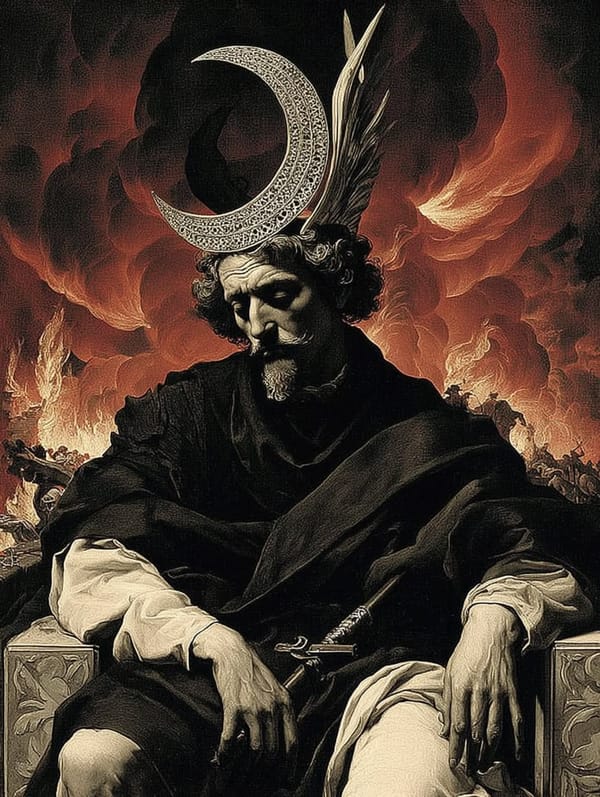
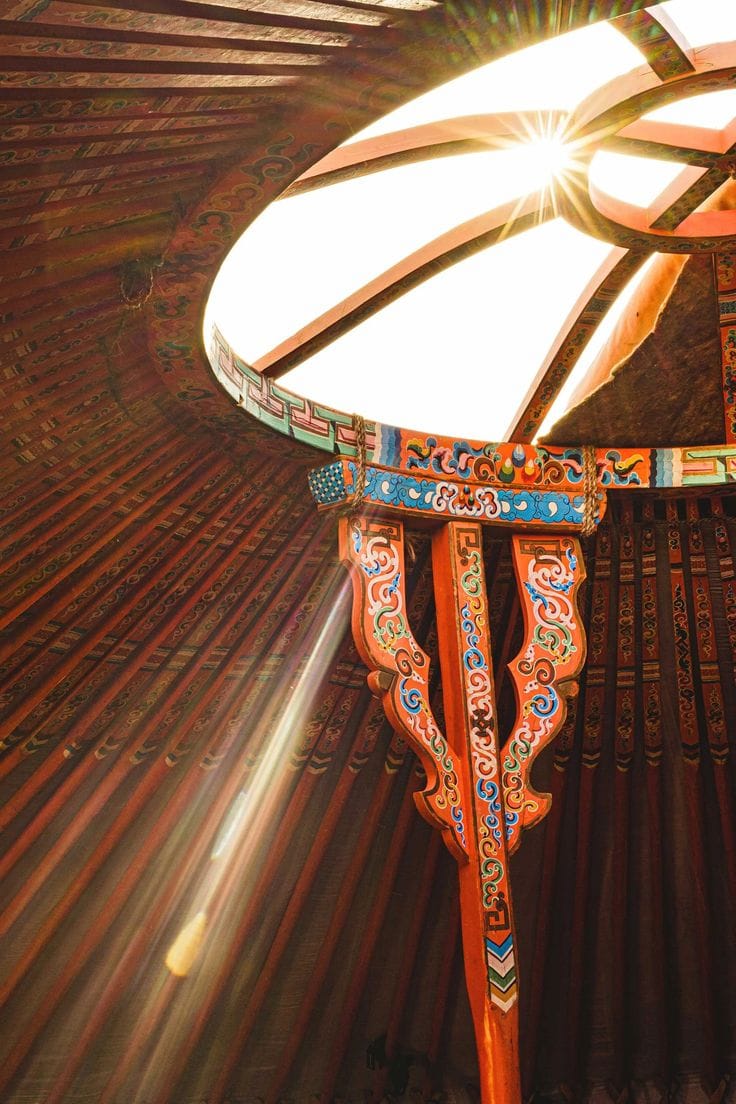
Later I would learn that in Mongolian cosmology, the Sky is not a metaphor. It is principle. Tengri is not a jealous deity demanding obedience. It is vertical order. Above is the Sky. Below is the Earth. Between them stands the human. Suspended, not dominant. That orientation explains something I had felt long before I had vocabulary for it. It explains why nature never felt decorative to me. Forest was not scenery. Water was not aesthetic. Sunlight was not romantic. They were components of alignment.
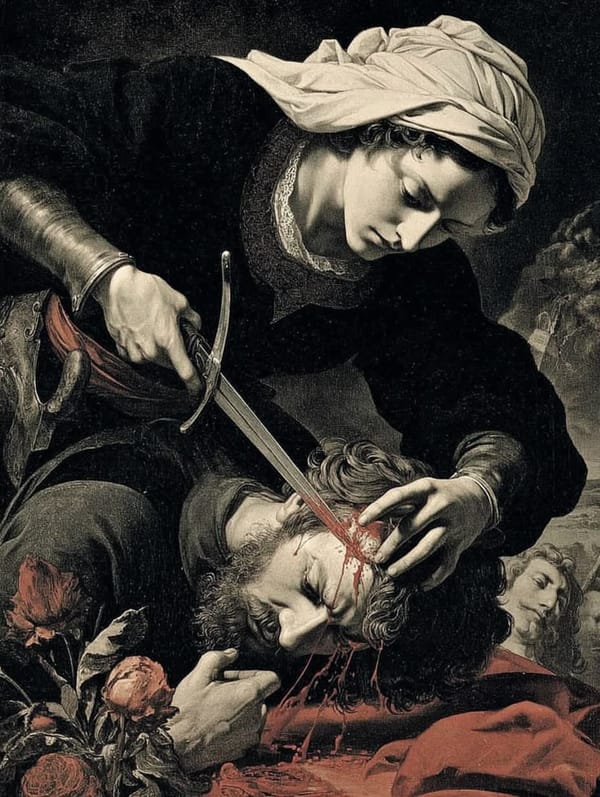
Mongolian people can be the most self isolated, secretive and inward community ever, I think. We don't like to share info, we don't like to be part of anything or any group or any trend. Also there are practices in Mongolian heritage that, if explained casually, sound brutal. Blood rituals. Animal sacrifice. Ceremonies that involve washing in what modern urban morality would call violence. But when those practices are seen through steppe logic, they are not barbarism for spectacle. They are exchange. They are acknowledgment that survival has cost. The horse is not an animal in the sentimental sense; it is transport, companion, continuation. Blood is not theatrical gore; it is life acknowledging life. You cannot sanitize a cosmology built on survival in harsh terrain. It was never meant to be clean.
And yet, we did not grow up performing these rituals daily. We grew up carrying their memory. The presence of them. The knowledge that this was part of us. The same way some families pass down recipes, others pass down war stories, we passed down orientation. The idea that you do not kneel easily. That you do not collapse publicly. That if you fight, you fight fully. That if you survive, you do not apologize for it.
This is where Chinggis Khan enters not as propaganda, but as atmosphere. In Mongolia, he is not whispered about as shame. He is not erased from textbooks. He is not metabolized as national trauma in the same way twentieth-century imperial figures are in Germany or Japan. He is remembered as proof of scale. As evidence that a people who lived on open land without marble cities or permanent walls reorganized half the known world through coordination and discipline. Violence existed. Of course it did. Empire is never gentle. But the internal narrative is not built on guilt. It is built on capacity.
That difference is important. In cultures shaped heavily by Abrahamic guilt frameworks, moral identity is tied to confession and repentance. In steppe inheritance, legitimacy was historically tied to survival and effectiveness. If you endured, you were aligned. If you expanded, you were capable. If you fell, alignment withdrew. It is conditional, but not confessional.
I sometimes wonder how much of this logic lives in my reflexes without me consciously endorsing it. Why humiliation feels more intolerable than loss. Why authority must prove competence before I grant respect. Why obedience feels unnatural unless earned. These are not ideas I memorized. They are reactions I notice.
And still, despite all of this, Mongolian identity does not shout. It does not evangelize Tengri. It does not demand conversion. It exists quietly. Almost secretively. Not because it is ashamed, but because it does not require validation. When something feels embedded deeply enough, you do not argue for it daily. You carry it.
I was given the freedom to choose any religion. And that freedom allowed me to see religion clearly. But clarity did not erase the layer beneath it. It simply revealed it. The part that feels at home under sky. The part that does not feel disturbed by wind. The part that still asks, even when logic says it shouldn’t. Not out of fear. Not out of ignorance. But because something in the blood recognizes rhythm older than doctrine.
This is not about rejecting Islam. It is not about rejecting Christianity. It is not about romanticizing the steppe. It is about understanding that before organized religion claimed territory, there was already orientation. And sometimes, no matter how analytic you become, that orientation remains.
If I speak about inheritance as something biological, I am not speaking about superiority or destiny. I am speaking about pattern. We are comfortable accepting that certain populations adapt physically to climate over centuries. Skin tones shift according to sunlight exposure. Lung capacity adjusts at high altitudes. Lactose tolerance develops in pastoral societies. No one calls that mystical. It is evolutionary adaptation. And yet the moment we suggest that temperament itself may also be shaped by long-term environment, people grow uncomfortable, as if personality must be entirely self-invented and detached from history.
But look at the world honestly. Spend time in different regions without romanticizing them. Walk through the Balkans and feel the volatility simmering under humor. Go to Scandinavia and feel the restraint that borders on emotional minimalism. Sit in the Mediterranean and observe how expressiveness moves through conversation without apology. These are not stereotypes invented overnight. They are accumulated nervous systems shaped by war, weather, migration, famine, trade, occupation, and survival pressure. Cultures metabolize stress differently because they were exposed to different stressors for different durations.
The steppe is not farmland. It is not coastal city-state life. It is not a protected valley. It is open exposure. Nomadic existence does not reward passivity. It does not reward slow bureaucratic thinking. It rewards immediate adaptation. When your entire survival depends on mobility, herd management, alliance negotiation, and defense against attack, your threshold for threat detection lowers. You cannot afford to ignore danger. Over centuries, that creates populations who are quicker to react, slower to kneel, faster to reorganize under pressure. That is not mythology. It is survival logic.
If you grow up inside that inheritance, even generations later in urban environments, the reflex does not disappear. It transforms. It becomes intolerance for confinement. It becomes resistance to humiliation. It becomes a body that stiffens instinctively when authority is imposed without competence. It becomes a kind of independence that outsiders label stubbornness. But from inside, it feels like calibration. You do not submit because submission historically meant erasure.
This is why I find it interesting how different nations metabolize their past. Germany carries its twentieth-century history with institutional remorse. Japan reorganized itself around reconstruction and restraint. Balkan countries carry fragmentation and defiance almost visibly in social dynamics. Mongolia carries Chinggis Khan without public self-hatred. The difference is not about morality alone. It is about how each population’s historical arc interacted with modern global judgment. The Mongol Empire did not collapse into a twentieth-century moral trial televised worldwide. It dissolved centuries ago. The narrative solidified as endurance rather than apology. For Mongols, Chinggis Khan is not daily political fuel. He is historical gravity. He is proof that a scattered people once reorganized the world’s trade routes and military structures with terrifying efficiency.
When you grow up with that story in the background, you internalize something subtle. Not a desire to conquer. Not bloodlust. But a refusal to believe that your people are small. Even when the country itself is geographically modest and politically quiet, the psychological memory of scale remains. It changes posture. It changes the way you process insult. It changes the way you imagine limitation.
And yet this is not unique to Mongols. Every nation carries something similar. The Balkans carry defiance. The British carry imperial residue disguised as irony. The French carry intellectual pride. The Americans carry frontier mythology. These are not accidental. They are narrative sediment layered over centuries of conflict and expansion. What differs is how consciously those narratives are examined.
When I say it feels genetic, I do not mean that a single gene encodes conquest. I mean that long-term environmental stress can shape stress-response systems across generations. Modern epigenetics already acknowledges that trauma and chronic stress can alter gene expression. If famine can alter metabolism across generations, why is it impossible that persistent high-threat mobility shaped temperament clusters? We are comfortable saying that some people are biologically predisposed to sleep later because their ancestors guarded fire at night. Why is it controversial to suggest that some populations may be predisposed to lower tolerance for domination because their ancestors survived by resisting it?
The discomfort comes from politics. The fear that biological explanation turns into hierarchy. But understanding pattern is not the same as ranking it. Recognizing that different bloodlines metabolize power, threat, and authority differently does not require moral superiority. It requires honesty.
In my own reflexes, I notice how easily I shift into fight mode when I feel cornered. I notice how deeply humiliation burns compared to loss. I notice how instinctively I scan for competence before granting respect. These are not virtues. They are patterns. And I cannot entirely explain them through individual psychology alone. They feel older than my personal experiences.
At the same time, I also see how modern life collides with this inheritance. Corporate systems reward compliance. Institutional hierarchies reward patience and submission to process. If your nervous system was historically shaped by mobility and rapid adaptation, bureaucratic stagnation feels suffocating. That does not mean you are incapable of discipline. It means your discipline operates differently. It is strategic, not submissive. It prefers autonomy over micromanagement.
And this is where many misunderstandings begin. When a people who historically survived by refusing erasure enter modern systems built on procedural obedience, friction is inevitable. That friction is often labeled as aggression or instability. But sometimes it is simply inherited calibration misaligned with contemporary structure.
The interesting part is that most Mongols do not articulate this consciously. They do not sit and analyze epigenetics. They do not debate nervous system inheritance at dinner tables. They simply live it. It appears in posture. In silence. In how conflict is handled. In how pride is carried without theatrics. There is a density to it. A self-containment that does not feel fragile.
And perhaps that is why it is rarely explained outwardly. Because to explain it would require translation into frameworks that were not designed for it. Steppe inheritance does not fit neatly into Abrahamic guilt models. It does not fit neatly into liberal individualism either. It sits somewhere between survival and sovereignty.
When I look at other nations, I see similar inherited reflexes. I see how Balkan volatility comes from centuries of contested land and imperial fragmentation. I see how Mediterranean emotionality comes from trade, sea, exposure to constant cultural mixing. I see how East Asian restraint comes from dense social hierarchies and long bureaucratic continuity. None of these are moral judgments. They are environmental imprints.
So when I say blood remembers, I do not mean blood is destiny. I mean blood carries history long after textbooks simplify it. And if we do not examine that inheritance consciously, we risk either romanticizing it blindly or rejecting it entirely.
For me, it is not about glorifying the fight-or-die reflex. It is about recognizing it. Understanding where it serves and where it sabotages. Recognizing that some of my instincts may not be personal rebellion but ancestral echo.
Because once you see that, you stop arguing with yourself as if you are broken. You begin to see that you are patterned. And patterns can be understood.
When I moved to Turkey, I did not expect to see fragments of the steppe everywhere. Turkey presents itself primarily through Islam and through modern nationalism. Those two forces hold the country together more visibly than anything else. Religion provides moral structure and community rhythm. Nationalism provides political cohesion and shared myth. It is a country layered with Ottoman memory, republican reform, Balkan migration, Central Asian echoes, Middle Eastern influence, Mediterranean temperament. It is not a simple lineage. It is a braided one.
And yet, beneath the visible layer of Islam, I kept recognizing gestures that felt older than scripture.
Not in sermons. Not in official discourse. In habits.
The way people still tie cloth to trees when making wishes. The way certain families visit shrines that operate more like ancestral sites than strictly Islamic theology would prescribe. The way blue beads hang in homes and cars, not as doctrine but as protection. The way water is treated as cleansing beyond symbolic ritual. The way elders speak of fate not only as divine decree but as something tied to lineage. The way graves are visited with a mixture of prayer and conversation, as if the dead are not gone but relocated.
None of these practices contradict Islam directly. They have simply merged with it. They are absorbed. Renamed. Reframed. What was once Sky becomes Allah. What was once spirit becomes destiny. What was once shaman becomes “hoca.” The vocabulary shifts, but the orientation remains.
Tengrism did not arrive in Anatolia through official proclamation. It arrived through people. Through migrating Turkic tribes who carried their cosmology with them long before the Ottoman state system formalized Islam as political identity. Over time, Islam became the dominant language of faith, but it did not erase the previous structure entirely. It layered over it. It provided doctrine where there had been fluid cosmology. It provided text where there had been oral memory. But certain reflexes survived.
You can see it especially in rural customs and in families of Central Asian origin who have lived in Turkey for generations without consciously identifying as Tengrist. They will say they are Muslim, and they are. They pray, they fast, they marry within Islamic framework. But if you look carefully, there is something else there. A way of relating to nature that feels older. A respect for trees, for mountains, for water, that is not purely theological. A sense that sky itself carries presence.
The irony is that many do not even know where these gestures originate. Turkmen families, Central Asian descendants, communities that migrated centuries ago, often cannot trace the specific line back to the steppe. The origin story has blurred. But the customs remain. They have simply been renamed.
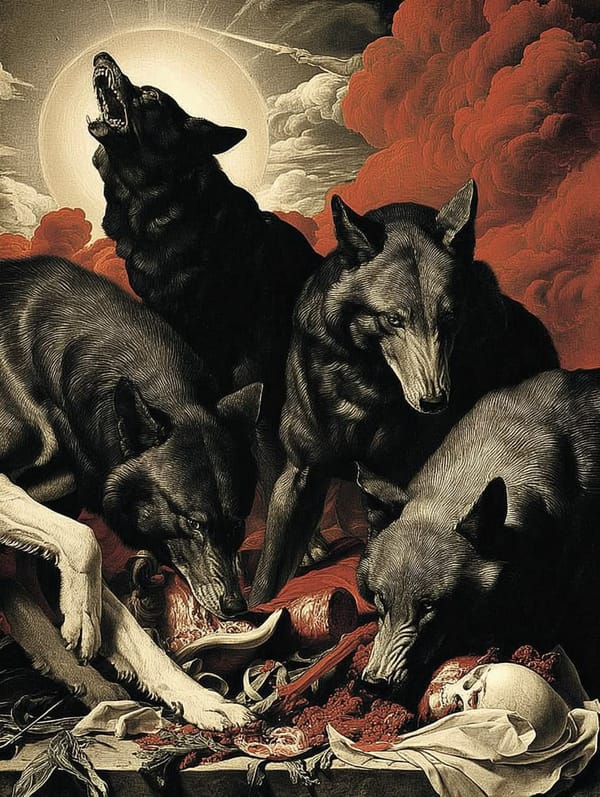
And this is where nationalism quietly intertwines with older cosmology. Turkish nationalism often invokes wolf imagery, sky symbolism, pre-Islamic heroism, even when it speaks in modern political language. The wolf, the steppe, the idea of ancestral resilience, these symbols are not Islamic. They are older. They are echoes of Tengrism folded into national identity. Religion becomes the visible adhesive. Nationalism becomes the emotional amplifier. Beneath both lies something more archaic.
I avoid criticizing religion in this context out of respect for the country that raised me. Turkey’s relationship with Islam is complex, layered, and deeply personal for millions of people. It deserves seriousness, not reduction. But acknowledging that Islam in Turkey carries steppe residue is not disrespect. It is historical observation. No religion enters a land and erases everything that preceded it. It adapts. It absorbs. It negotiates.
What fascinates me is how invisible this layering has become. Many Turkish people who practice certain customs would be surprised to learn they predate Islam. And even if they were told, most would resist the information. Not because it is false, but because identity stabilizes around familiar narratives. It is uncomfortable to be told that what you believe is purely religious might also be cultural sediment from another cosmology.
But this invisibility does not erase continuity.
When I lived in Turkey, I felt both inside and outside this structure. Inside, because I understood the codes. Outside, because I recognized the older rhythm beneath them. I could see how religion and nationalism functioned as binding forces for a multicultural society. Turkey is not ethnically uniform. It is Balkan, Caucasian, Central Asian, Anatolian, Mediterranean, Arab, Kurdish, and more. Religion becomes shared grammar. Nationalism becomes shared myth. Without them, fragmentation would intensify.
And yet, underneath the official narratives, I kept sensing the steppe breathing quietly.
It appears in posture. In pride. In refusal to bow easily. In the emotional density that does not require constant verbal affirmation. In the way some people look at open land and feel something ancient stir without knowing why.
I do not romanticize this inheritance blindly. I know it carries violence. I know it carries hierarchy. I know it can turn into hard nationalism when misused. But it also carries resilience. It carries orientation. It carries a sense of belonging that does not depend entirely on institutional approval.
There are moments when I stand by the sea and feel something that no scripture has ever fully described for me. When water surrounds me, when moonlight reflects across its surface, when wind hits my face without obstruction, I feel aligned in a way that has nothing to do with doctrine. I can explain tides scientifically. I can explain lunar reflection through physics. I can explain salt concentration through chemistry. None of that explanation cancels the sensation.
When I look in the mirror and see my long teeth, I can explain them biologically. I know genetics. I know dental structure. I know there is no mystical warrior gene hiding in enamel. And yet, there is a strange familiarity in seeing them. A reminder of stories whispered half-seriously about lineage, about steppe blood, about endurance. I do not mistake it for proof of destiny. I recognize it as symbol. And symbols, when repeated through generations, become part of how the soul understands itself.
No matter how rational I become, no matter how critically I analyze myth, there remains a part of me that feels suspended between earth and sky. That part does not argue. It does not demand validation. It simply recognizes.
Perhaps that is the final tension. You can live inside modern systems, speak the language of institutions, analyze religion objectively, and still feel that your soul belongs to something older than all of it. Not superior. Not purer. Just older.
And maybe the reason we do not talk about it loudly is because it does not need advertisement. It is not ideology. It is orientation.
Some things are learned.
Some things are chosen.
And some things are remembered.
Even when you cannot explain why, you just remember being part of the sky above.