The Cult of Persona

Can we admit something without pretending we’re above it?
Nobody is becoming a person anymore. Everyone is becoming a brand. And I don’t mean influencers, I mean normal people. Your friends, your ex, that guy from the gym who discovered “discipline” after one podcast and suddenly speaks like he’s writing a manifesto. Everyone is packaging themselves as if they’re about to launch publicly, as if identity itself needs positioning.
We used to ask, “Who are you?” Now the question sounds different, even if we don’t say it out loud. It’s closer to, “What are you presenting yourself as?” The calm one, the mysterious one, the healed one, the soft one, the rich one, the untouchable one. Nobody is confused anymore, they’re in an era. Nobody is lost, they’re “figuring things out privately.” Nobody is failing, they’re “building something quietly.” The language didn’t evolve by accident. It softened reality into something more… consumable.
It’s not that people are lying. That would be too simple.
It’s that people are editing.
And what they’re editing for is not truth, not connection, not even respect. It’s attention. Pure, measurable, addictive attention. The kind that comes in numbers, in views, in silent watchers who never speak but never miss a post. We like to believe we don’t care about it, but remove attention from the equation and a lot of carefully constructed identities would quietly collapse.
The interesting part is how aware everyone is. This isn’t unconscious behavior anymore. People know exactly what they’re doing. They know which version of themselves performs better, which angles communicate confidence, which silence creates curiosity. A gym post is never just a gym post. A book is never just a book. Even randomness is curated now. “I’m chaotic” has lighting, composition, timing. Spontaneity has become something you prepare for.
At some point, working on yourself stopped being internal. It became visible. Healing turned into something you can present. Discipline became something you can display. Even breakdowns are aesthetic now, controlled enough to be relatable, but not enough to be uncomfortable. And the strange thing is, it works. Because everyone else is doing the same thing. We are not only performing, we are also the audience. Constantly watching, comparing, absorbing.
I’m not outside of this either. I say I keep things minimal, that I limit what I post, that I control how much of myself is visible. And that’s true. But even that is a strategy. Knowing what not to show is still part of knowing how to be seen. We all understand this system more than we admit. We understand absence, timing, curiosity. We understand that disappearing can sometimes say more than speaking. That’s not accidental. That’s literacy.
What’s more unsettling is how intimate attention has started to feel. Not in an obvious way, not purely sexual, but something quieter. Being watched feels close. Being desired, even silently, starts to feel like proof that you exist in a certain way. A single view from the right person can shift your entire mood for hours. And we accept this as normal, even though it has very little to do with anything stable.
Because attention is not grounding. It doesn’t anchor you. It amplifies you. And when identity becomes something you perform, you start making choices that protect the performance. Not what you like, but what fits. Not what feels right, but what looks right. You don’t step out of the narrative because the narrative is what keeps you visible.
The more aware you are, the more dangerous this becomes. You learn how to imply without saying, how to stay slightly out of reach, how to be present without being fully available. You understand that mystery increases value, that distance creates demand. And slowly, almost without noticing, you stop being a person moving through life and become something else entirely, something designed, something managed.
It’s absurd when you look at it clearly. Slightly funny. Occasionally attractive. But there is also something quietly unsettling about it.
Because attention feeds you, but it doesn’t hold you.
And when it fades, even briefly, the silence feels heavier than it should.
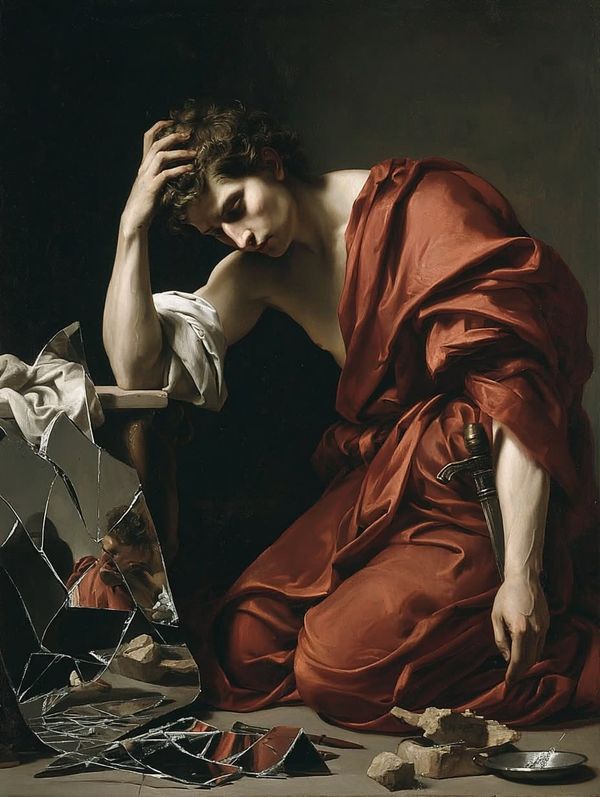
Sometimes I wonder what would remain if all of it disappeared at once. No stories, no views, no invisible audience tracking your existence in the background. Would we still feel interesting? Would we still feel wanted? Or would we have to build something that doesn’t depend on being seen at all?
Most people don’t like that question.
And the discomfort is not random.
It usually means it’s touching something real.